Sunday, October 25, 2020

The Known Unknowns

How could Trump Still Win
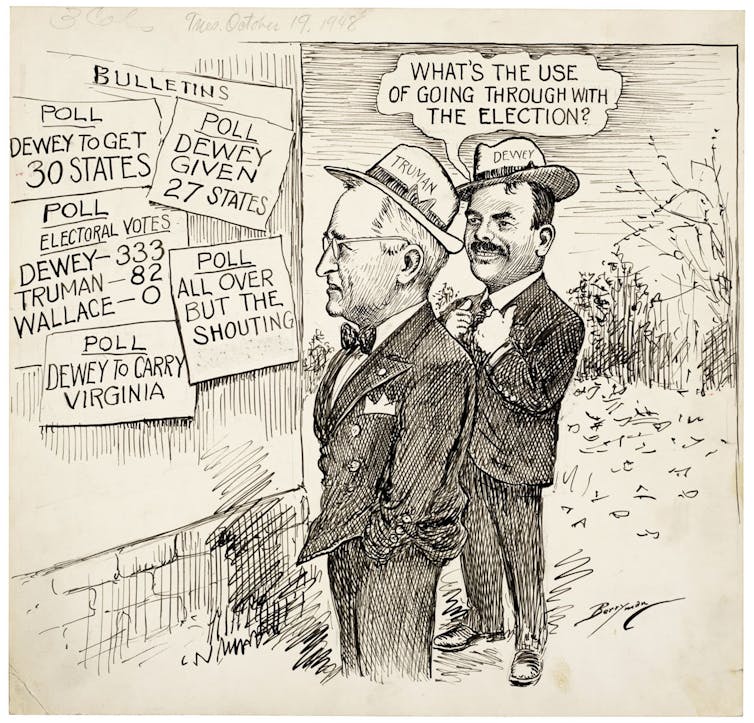
In response to the 2nd Iraq War failures, Rumsfeld famously described, "known knowns, known unknowns, and unknown unknowns". This statement was criticized, including by yours truly, because this was used to avoid taking responsibility. But his words still ring true. In fact, they help explain the paradox of our current feelings. As of now, President Trump is looking at his lowest chances ever of being re-elected. So, why are we still scared?

Well, because of 2016, obviously. At near this time, the Access Hollywood tapes had been released, and chances were just as bad. Then, the Podesta emails were revealed, and Comey announced re-opening the Hillary Clinton investigations.

So, are there other events waiting to save Trump this time? What is that we don't know? In other words, what are the known unknowns? (Obviously, I can't talk about the unknown unknowns because, well, I don't know anything about them. And what's the point in talking about the known knowns. We already know them.)

The Data

One question we are asking is 'could the polls be wrong?'. That's what a lot of people felt after 2016. Well, that's not me, considering I stressed that 30% chance of the Trump meteor hit. From my perspective, the polls were not wrong. They were misread. That is precisely the position of FiveThirtyEight. One of our problems as human beings is that we overstate a measurement's accuracy. A poll that showed Hillary Clint with a 2-point lead is a statistical tie. And as per my last post, if it was a national poll, she was behind. Where I got it wrong was that I misunderstood what a polling error means. I was thinking of it as if a weight scale said +/- 2 pounds. So, if the scale shows I'm 200 pounds (in my dreams), I could be 198 or 202. However, that's not how polling errors work. On a scale, the error margin is due to mechanical effects. So, if I measured myself on different scales, I would get a more accurate measure of my weight. However, the error margin in polls has to do with the information. So, while a polling average, like RealClearPolitics and FiveThrityEight, protects you from polling assumptions not shared, it does not protect when polls make the same assumption. It also doesn't protect you from missing data since most polls will likely lack the same.

Two ways polls can be disrupted is by a late swing by undecided voters and a drastic change in voting behavior. Both of which could explain 2016.

The problem with a late undecided voter swing is that Biden is not Hillary. Hillary Clinton rarely polled above 50%, where Biden is the opposite. That Biden is consistently above 50%, in fact, speaks better for his chances than having a 10-point lead. Even if Trump wins all undecideds, Biden still wins. But again, remember, it is states that matter. Even here, there is good news. The three states (Michigan, Wisconsin, and Pennsylvania) that would win Biden the election are regularly above 49%. Technically, enough undecideds for Trump to win, but he practically must get all of them. Not just most. However, don't get too comfortable. An undecided shift can change things when combined with other factors, as you will see later.

In the case of voting behavior changes, what happens is that pollsters can't guarantee that their sample represents the real population of voters. So, they adjust. These adjustments are based on past voting behavior, so if there is a drastic change, they will adjust incorrectly. The most often way that happens is by a change in who votes. Pollsters adjust by 'weighing' polls to make their samples match real demographics. The problem is that these weights can only be based on past elections. If voting were to change drastically, the weights will be wrong. This happened in 2016 because "uneducated" white voters had been under-weighted, especially in Pennsylvania. However, 2016 is now part of that electoral history and thus included in the polling weights. The kind of polling error would have to occur with another group. For example, older voters support Trump less for 2020 than 2016, which is part of Biden's lead. Now, what if COVID-19 made them vote less. Those polls would error in Trump's favor because older voters had been over-weighted. I'm not saying this is likely to happen. In fact, I don't think it will. This just presents the kind of scenario that could create the polling error we fear.

Another scenario is if a "non-battleground" state flips. Again, this happened in 2016 with Pennsylvania, Michigan, and Wisconsin. Not surprisingly, "non-battleground" states don't get polled as much, so the data there is less accurate.

Besides these three, pollsters don't work in a vacuum. They have incentives, financial and otherwise, that influence their results, sometimes overtly. This is where looking at polling averages helps, but not when most polls share motivations. The good news is that, because of 2016, most of the incentives are to give Trump a better chance.

And, of course, there is the tightening I talked about in the last post. Consider this math. If Biden is 51% in a poll and has a 10-point lead, Trump has 41% in that poll. And thus, 8% are undecided or third parties. So, as polling is done later, the lead dropping by 5% would not be strange. That's why we should be more worried if Biden drops below 50% than if his lead shrinks. If Biden stayed at 51% and Trump rose to 48%, the lead would shrink to 3%. Here, Biden's chances to win did not lessen. Instead, more Trump voters made up their minds.

Events

Of course, polls don't just change. Events happen to change them. And let's be honest. That is what is keeping us up at night.

So, what about the Russians? That's already happened with a supposed laptop from Hunter Biden. However, again, Biden is not Clinton. The Podesta emails fit with what we already believed about Clinton, but Biden is more trusted. Also, the response has been different. This story initially got blocked by Twitter and Facebook with only media that is basically propaganda taking it seriously. Even if it is not stopping, it is slowing it down. And clearly, slowing it down has had its effect That is why you haven't seen me include any links about it. I'm sure that we have not heard the last accusations about Hunter Biden, up to and after the election. Now the story is growing, but only in conservative media. And that's the problem for Trump. As it grows in conservative media, it helps Trump motivate those who already voted for him. In other words, it hastens tightening, not convert voters. Until the story is taken seriously on CBS Nightly News, it only helps in turnout. In the end, it will be more of a factor in 2024 than in 2020.

As for scandals, we had them as well. Including Biden being accused of rape in the primaries. Again, no effect. While I would be surprised if Ratcliffe or Barr does NOT announce an investigation, the result is likely the same. What is instructive is the real scandal about the Senate candidate, Cal Cunningham, for North Carolina. Still, his polls have not gone down. The takeaway is that we want Trump out, and we are not going to be distracted.

Now, there's the more subtle use of targeted social media to spread misinformation. Again, happening now, though, by definition, I can't say how much Russians are secretly infiltrating us because, well, it's a secret. But just as I don't know the influence, I argue that we overestimate the effect. Again, Biden is not Hillary, and this is not 2016. We are aware of them now. People ran to third party candidates because they were both sure Hilary would win and disgusted with her at the same time. Let me ask. Who is the Green Party candidate? Who is the Libertarian candidate? Don't know? Neither do I. And none of us care.

Of course, there are the unmentionables. You know. Things that begin with 't' and end with 'ist'. Well, do you really think an event that makes us feel less safe would change our minds about this President? I would also include the domestic kind. Here I go back to my continuing stance. Such tactics require more organization than the Trump team is capable of. I can easily imagine a horrific event happening at a critical polling place, but only one. Would that stop voters across the country? Across a state? Would it be more likely to prevent those voting for Trump who has not voted early or by mail? The unmentionable that does give me pause is the death of a candidate. To happen within the days left until November 3rd is thankfully unlikely, but I can't discount it. Its outcome is more complicated than I am capable of going into, so I recommend this link.

One election affecting event that is occurring is COVID-19. Right now, this event only hurts Trump. But it has also created a massive change in voting behavior. Precisely the kind of changes that generate polling errors. Then again, it could make a scenario where we find Biden's lead was even more. Regardless, we won't know which until after the election. Then, there is the possibility that a vaccine is announced. OK, let me correct that. There will be an announcement of a vaccine by November 3rd, probably by tweet. However, this has been preempted. Both Biden and Harris have expressed the same sentiment I feel. I'll take it when someone other than Trump tells me. Given that attacks against their statements have had no effect, I'm quite sure that most others feel the same way.

Another event just recently is the announcement of a peace agreement between Sudan and Israel. However, foreign relation successes usually do not beat out domestic failures. Just ask Carter and H. W. Bush.

One event that could have happen, and I'm surprised that it didn't, is to pass a stimulus bill. When it comes to politics, You should trust Mitch McConnel's instincts over mine, but that still baffles me.

Of course, there could be more events I have not thought of, but those would be unknown unknown. Here's the thing. Remember that it can take as much 2 weeks for an event to show up in the polls. That means any event that would change the polls has already happened. With anything else, we won't know until all the votes are counted.

The Rallies

Here is what the Trump campaign is saying, and unfortunately, there is some logic to it. They can win with rallies. OK, follow me. If you can ignore the racism and fascism, those rallies do look fun. Kind of like the 1997 move, Starship Troopers. And, when Trump gets thousands to attend, they get excited and vote for him, even those that just wanted to see what the fuss was about. The numbers may be small compared to a national debate, and the effect may not last long. Still, he's doing them near the election, in target areas, and a lot of them. Shifting his fortunes in enough states to win a 2nd term is possible. Now there is a lot of motivational thinking happening here and risks he's ignoring. He's also vulnerable in more states than in 2016. Still, we should not be flippant. I still claim that his win in 2016 was through luck, but it was not accidental. His campaign did plan to win by flipping rust belt states, and these rallies were a large part. This is one of the few times I can't say Trump was wrong.

The Debate

So, the 2nd debate has happened, which I intentionally waited for before releasing this post. Unfortunately, it's still too early to know the real effect, so I can only give my opinion, not data. To start, Trump did help himself. The question was, 'is it enough?'. I'm sure Republicans are happy right now, especially senators and congressmen up for reelection. Trump debated like an ordinary Republican politician. Granted, more like a stupid Ted Cruz than a Jeb Bush, but one that conservative could feel comfortable supporting. But again, Biden is not Hilary. With Hilary, that was enough. With Biden, Trump needs to win other than Republicans and conservatives.

And Now Some Corrections

My reasoning has 2 assumptions. Trump will not flip a state he lost in 2016, and he will not win by popular vote. I still stand by this, but Nate Silvers gives a better chance: About a 1 to 3 chance of flipping a state and, if he wins, 1 to 2 doing so by popular vote. (Here's my math. As of writing this, the "Weird and not-so-weird possibilities" gives a 26% for "Trump wins at least one state that Clinton won in 2016". The chance to win by the popular vote is 4% vs. 8% that he wins by the Electoral College.) The odds are still on my side, but we have learned not to ignore a 25% to 30% chance.

So which states do we need to watch? Minnesota and Nevada are the most likely candidates.

They still look good for Biden. However, these are two states that have gotten overlooked by pollsters and have the potential for the kind of polling errors I described before.

Perhaps you caught me pulling a fast one. When I published the last post, I made a mistake and fixed it the next day. I had forgotten that Maine and Nebraska split their electoral votes, giving 1 each to Maine 2nd and Nebraska 2nd. You would think that only 1 electoral vote would not make a difference but enough to need Michigan, Pennsylvania, and Wisconsin instead of just Michigan and Pennsylvania. Both had been won by Trump, but Biden is better positioned to take them this time.

Cheating

What triggers my insomnia the most is that Republicans will cheat their way to a win. And the forecast models cannot include cheating. So, yes, cheating gives Trump a higher probability of winning than we are seeing. I am mostly talking about legal "cheating": reducing the places you can vote, aggressively revoking registrations, etc. This is why I have been tracking who controls critical states' elections and why I don't count on Florida, Texas, and Georgia. We are talking about Trump again being in power because the system is rigged. I'd feel better if it were because too many Americans are racist. That at least would still be a democracy.

The good news is that cheating only works because it is small, so it is more of a problem for smaller local elections. Given the current lead by Biden, cheating alone would not do it. There would need to be other shifts in Trump's favor. So, consider this. Let's say the state that decides the election has 10 million votes. The last poll had Biden at 50%, Trump at 44%, 3% 3rd parties, and 3% undecided. So, the lead was 6%. Let say there was a 2% polling error due to COVID-19 in Trump's favor, so it was really Biden 49%, Trump 45%, and a 4% lead. On election day, the swing voters went to Trump (possibly because they went to rallies). This is the result.

  • Biden 49% => 4.9 million
  • Trump 48% => 4.8 million
  • 3rd Parties 3% => 300,000

However, 2% of Biden's vote had been taken away by cheating. Then, Biden has 4.802 million, and the post-cheat total vote count is 9.902 million instead of 10. The election day result will be this.

  • Biden 4.802 million => 48.49%
  • Trump 4.8 million => 48.47%
  • 3rd Parties 300,000 => 3%

And we are in a recount.

We could also consider Russian interference on election day that same way because most hacks just simulate how state officials cheat: messing with voter registration, shutting down polling places, spreading misinformation, etc. Directly changing vote counts is practically impossible. I could get into the details of why. The short technical explanation is that our election system is already too screwed up to hack. The big difference is that Russians can choose to be blatant about it. Typical Republican cheating must be below 2% because otherwise, it will be found out. Russians don't care. They could choose to interfere, having an as large an effect as they could pull off. It wouldn't get Trump elected, but it would create the shit show they want. (Yes, I said shit show. If they can say it on CNN after the debate, I can say it here.)

My example has a few points to note. The first is that the election results will be closer than the polls. That is because there is no such thing as an undecided vote. Second, my example did not require a dramatic event. If fact, everything that changed a 6% lead to a tie is happening now.

What About Early and Mail-In Voting?

Short answer. Don't get overconfident. Yes, it is good news, but we should treat it as the pollsters do, no different than voting on election day. In other words, if someone has already cast a vote, their answer on the poll would be no different. Now, of course, it does mean the poll numbers will change less. But, remember, expect over 150 million to vote in this election. Even if 60 million votes are cast before November 3rd, that still leaves over 90 million on election day. And, not unsurprisingly, undecided voters are more likely to wait until election day because, well, they're indecisive.

An effect could be "likely voter" models because pollsters are not prepared to deal with this much early voting. If someone has already voted, they are 100% likely to vote, but that makes the polls only if the pollsters ask, which they sometimes don't.

As for cheating, it is good and bad news. Most of the ways Republicans (and Russians) cheat are undone by early and mail-in voting. However, that also gives them more time to think of new ways, and mail-in voting has more technicalities to use against Biden in a recount.

Summary

Basically, Trump needs to get the same people voting for him in 2016 and lesson some voting for Biden. Just turnout won't do it. This lets up break the known unknowns into two groups:

What can take votes from Biden

  • Polling error
    • A drastic change in voting behavior
    • Trump winning a "non-battleground" state such as Minnesota or Nevada
  • Cheating
    • Affecting voter registration, closing polling places, etc.
    • Misinformation through social media

What can add votes for Trump

  • Scandal, real and manufactured
  • Rallies
  • The Final Debate

What is likely to have no effect

  • Unmentionables
  • Vaccine
  • Sudan-Israel peace agreement

A lot scary stuff here, so let me put this all in perspective. Polling errorss could also be for Biden. In fact, when we talk about him winning Texas and Georgia that is the scenario. Except for cheating, the other events could hurt Trump as much as help him. In fact, I'll say this. Yes, Trump could win, but keep your pitchforks ready because he likely cheated.

Tuesday, August 11, 2020

It's the Electoral College Stupid

You Say Election. I Say Electoral College

Less than 3 months until the 2020 election, and we all have the same question. Will we be able to listen to news without an anxiety attack? As much as I and others feared of a President Trump, a second term would be worse. Unfortunately, our votes won’t decide. As always, it will the Electoral College.

So, let’s not be caught off guard and led by National Polls to overconfidence. Instead, let’s start by looking at the election by states. Let’s begin with this.

President Trump will not win the popular vote.

We talk a lot about how there is this unmovable block of about 37% to 40%, but what goes undiscussed is that those who disapprove are also unmovable, 50% to 56%. So, to win a majority, he would have to convince those who don’t like him to vote for him.

This also reflects in the Biden vs Trump. Biden has been ahead by 3% to 10% often close to 50%. So even to achieve a plurality, Trump has to “beat the polls”. Granted he did that in 2016, but not by 3%.

So, what Trump is going to do is become a more conventional politician trying to broaden his appeal and reach out to those that disagree with him……… Yeah, I couldn’t stop laughing either. Instead, he’s going to try to suppress the vote and win with the Electoral College like in 2016. When looking at any national poll, you should use this rule. If the democrat is ahead by 5%, the democrat is winning. If it’s 3%, it’s a tie. If it’s a tie, the democrat is losing. Note that this rule does not apply to state polls because the rule is a result of, you should have guessed, the Electoral College.

Biden states won’t flip.

I've been watching Trump’s approval and Biden vs Trump polls broken by states since February. The states Hillary won have not improved for Trump while states that voted for him have worsen. So, it will come down to how many states Biden takes away from Trump. Not the other way around. In 2016, the Trump’s Electoral Vote total was 306 which means Biden needs to gain 37. (For this blog, I going to assume democrats keep the House.) Two states can be enough to win. If they are the right states.

Expect polls to move towards Trump as we near the election.

There are many reasons for this, but candidates’ polls usually move closer to each other as the election nears. Some but not all of the reasons are: the losing candidate is more aggressive to get the polls back, voters realize that what they say to pollsters are a fantasy but votes are real, the losing candidate starts being compared to the other candidate instead of an ideal in our heads, etc.

If you’ve been watching the polls you may be seeing some tightening now though we should wait about a week before saying that.

Right now, Biden has been leading Trump by 7% to 8% which is ridiculous. And if it weren’t this close, I would be telling you to ignore it. But we live in ridiculous times with a pandemic and economic crisis that is likely to be present on election day. Even still, I would prepare myself for the lead to reduce by as much as 5% making it 2% to 3%. Enough to win, but only if it’s in the right states. Biden does not need more votes in California, and Trump does not need more votes in Alabama.

Now let’s count Electoral Votes.

Remember, Biden needs to flip 37.

Here are the states by order of Electoral Votes that I would say Biden could win:

Votes

State

High

Low

Governor

Secretary

29

Florida

7%

0%

R

R

20

Pennsylvania

8%

1%

D

D

18

Ohio

3%

0%

R

R

16

Michigan

11%

2%

D

D

15

North Carolina

3%

0%

D

N/A

11

Arizona

5%

-4%

R

D

10

Wisconsin

9%

-1%

D

D


When ordered by polls, it’s:

High

Low

Votes

State

Governor

Secretary

11%

2%

16

Michigan

D

D

8%

1%

20

Pennsylvania

D

D

9%

-1%

10

Wisconsin

D

D

7%

0%

29

Florida

R

R

3%

0%

15

North Carolina

D

N/A

3%

0%

18

Ohio

R

R

5%

-4%

11

Arizona

R

D


So now some details. High is the highest point I can find in the polls and Low is the lowest. Both are considered to compensate for narrowing. This is why Pennsylvania is before Wisconsin and Ohio is before Arizona. I’m also preparing for “legal” vote suppression (fewer voting booth, restriction to absentee voting, et.), so I’ve noted the party of the Governor and Secretary of State. Therefore, North Carolina is before Ohio. As I used for national polling, I used the FiveThirtyEight site.

Of note, Texas and Georgia are not on this list. Right now, they are close to tied, but as I said before, I would expect a move to Trump’s favor as we get closer to the election. I’m not saying Biden could not win those states. I’m saying if he did, he would already have enough to win.

From this you see the top three states are Michigan, Pennsylvania and Wisconsin for 46 votes, and that scores the win. Note that these 3 tend to vote as a group further promoting this scenario. However, I know what you are thinking. These states were thought of as easy wins in 2016. Something was going on there that we didn’t see until it was too late. So, there is reason for caution. Let me see if this helps. Luck. We underestimate how much Trump may have been just lucky. Trump won Pennsylvania by only 46,000 votes. To put that in perspective, 50,000 votes in Pennsylvania were write-ins. If those that had voted for Mikey Mouse in 2016 switched for Biden, he can win Pennsylvania and so the country.

So, what about Florida? Though it’s 4th in the polls, it has the most votes. However, unless Pennsylvania is lost, Florida won’t decide the election.

One final point. You may take to mean your vote doesn’t matter unless you live in a state on this list. No. No. No. First, I’ve already argued why you should vote, no matter what, vote. Secondly, that kind of thinking loses elections. Third, and most important, Trump and Biden are not the only names on the ballot. There will be senators, congressmen, and local offices that are just as, if not more, important than the Presidency.

Thursday, November 7, 2019

The Impeachment Count - Part 2


Some Interesting Cases

Mitt Romney, Lisa Murkowski, and Susan Collins
You would think that Mitt Romney and Lisa Murkowski belong in Tier 1. They have often been vocal critics of Trump and have the most political independence from him. They also are not up for re-election. However, they aren’t compelled to vote against him either, unlike Susan Collins. So, I really don’t consider them higher than Tier 2.

Cory Gardner
This senator of Colorado is one of the most endangered ones in 2020, and who would suffer the most consequences by supporting Trump. Yet, that is not how he has been acting. A likely reason is that in this regard, the Trump team knows what they are doing. With atypical discretion, they have applied every carrot and stick to keep Gardner from defecting.

Richard Burr
Senator Burr was the Republican leader in the Senate investigation of Russian involvement in the 2016 election. That and the numbers would suggest he would at least be a voice of concern. However, so far, crickets. Either he is more partisan than he presented himself, or he is trying to be a principled juror and just not say anything.

Tim Scott
Talk about a mixed record. As the only black Republican senator, he has more than once criticized Trump’s behavior when it comes to racism. However, as representing a pro-Trump state, South Carolina, he has been more equivocal with the impeachment. Consider Tim Scott’s response to Trump’s lynching tweet.

Ron Johnson
OK, here’s one potentially for the history books. Again, by the numbers, Ron Johnson should be at least willing to go along with voting against Trump. However, there is a catch. He may be implicated in the crime, and reportedly talked to Ukraine officials while this was going on. At the least, he knew about the transgression. At worst, he participated.

Ted Cruz, Marco Rubio, and Rand Paul
What these three have in common is that they all have at some time been exceptionally critical of Trump and have, in turn, become hypocritical and sycophantic supporters of him. And, of note, they all three need Republican partisan support from their states. Rubio perhaps could change this, but at least that is the case for him now.

But more importantly, they all had, before Trump, voice ideologies that should make them his staunch critics. And they have good reason to hate him. Voting to remove Trump may not be the most politically smart move, but there would be a personal upside. Yes, it would be seen as cynical and disloyal by Republicans, but that would not be so new for them. And none are up for re-election in 2020. Heck, if they break soon enough, they could all run for President again in 2024.

I would not say turning on Trump is likely, but it’s not zero.

Mitch McConnell
Of course, Moscow Mitch is the most relevant senator in this process. The conventional wisdom is that he would want to get the trial over with as soon as possible, and that certainly is what he has been signaling. However, let’s consider him delaying the trial.

First, I don’t buy into the idea that quicker is necessarily better for either party. For all the arguments for sooner, I can think of one for later. Yes, too long is bad, but that could leave months or even a year of post-impeachment anger. In the end, it’s all really a guess. And there is a potential upside for waiting.

Consider the case of Susan Collins. Current polling says she will lose the 2020 election if she votes to exonerate. However, if she votes to remove, she is likely to get a primary challenger. And that pretty much sums up the case for any other senator where this vote is a tough choice.

But, what if the vote were after March next year when it would be too late for a primary challenger to file. Note that the bigger threat of voting against Trump is in the primary, not the general election. So, if the vote was late enough Collins could vote as she needed with no primary threat. And I expect other senators have a similar case.

More so, what if Moscow Mitch waited until after the election. If Trump has lost, then the vote will have limited consequences. If Trump won, the Senate could vote to remove him if they wished. Then they have the best of both worlds. With a full two years until the election, there would be a reduced backlash from Trump supporters, and the new President would be the much more acceptable Pence.

Yeah, I don’t see these scenarios as likely. But, again, not impossible.

Tuesday, November 5, 2019

The Impeachment Count - Part 1


The Tracking Republican Senators


I’m out of time.

I’ve owed you a track of Congress vs the President for over a year now, so with impeachment looming here, it is. A new button, Impeachment Count.

So, first, some of the ground rules.

This time we're counting for removal from office and just removal from office.
Before, I was seeing if Congress would keep the President from being “threatening”. That’s no longer a question since 2018. The House will block him. The Senate will block the House. Trump will try to be a dictator but will fail due to his own incompetence.

There is also no doubt as to will he be impeached. He will. The moment the Speaker announced the inquiry, impeachment was certain. She would not have done it if there were not the votes. And not voting now would be political malpractice. So, the only question is when.

Therefore, the only question left is whether there are enough, if any, Republican senators that would remove the President from office.

However, Speaker Pelosi’s goal is not removal.
The Speaker has to delicately time the vote. She has to give enough time that all the evidence that can be found is found, but not too long as so the inquiry can be made to look only political. Also, until the Impeachment vote happens, she (and by extension the Democrats) are in control. After that, Moscow Mitch is. Reason enough for her to keep the inquiry going as long as she can.

Given that she still is unlikely to get enough Republicans to vote for removal by that time. However, what she can do is make a vote against removal look so craven, she ensures control of the House, damages Trump’s re-election, and threatens Republican control of the Senate.

That’s the real battle here.

It’s 1, 4, 20, or 27
Remove of a president requires 67 senatorial votes. That means 20 Republicans in addition to the 47 Democrats. However, there is one vote that matters more than the others, Majority Leader Mitch McConnel.

What Moscow Mitch could do is unclear, but he could and is capable of is using whatever procedural trick is available. (Remember Merit Garland?) By his statement, the senate is constitutionally required to have a trial and a vote. However, "how long you're on [the trial] is a whole different matter." In other words, he could choose to have the vote 1 hour after the impeachment, leaving no time for any evidence being brought to the public. Or, he could delay the vote until after the election. My understanding is that it would have to happen while the current Senate is in power, but that would still leave about 3 months after we know who the next president is.

My usual measure as to if Moscow Mitch turns against Trump is that over half of the Republican senators want it. That number is 27.

However, removal is not the only adverse outcome for Republicans and the President. A clearly craven vote by senators would be electorally dangerous, especially if it looks bipartisan. That could mean as little as 4 Republicans, making the vote a straight majority, would cause harm.

Tiers of Desperation
Again, I must remind you how bad it would be for a Republican senator to vote for removal. At the very least, they will be viewed as disloyal, and their voters will be unmotivated. Effectively, all power would be ceded to the Democrats at the next election.

More likely, after a time, those senators will be the targets of political operatives and pundits who still believe the President should have been protected. Under the best scenarios, that would be over half of registered Republicans. And if the Trump remains, he’s made clear that will use all power and influence he has to attack those that voted against him, even at risk of Republican control of the Senate.

Before you judge them, honestly, ask yourself. What would you be willing to do if it risked your job? Not only your career but everything you worked for because that is what likely will happen. Democrats will gain all the power, pick the judges, increase the size of government, take away tax cuts to the rich, and add regulations.

Most would not show “political courage” under those conditions, any form of rationalization would be welcome, and every instinct would be to duck your head and hope it all just goes away.

Times would have to be desperate indeed. Meaning, only expect senators to vote for removal if:
  • Their voters would punish them.
  • They are safe and want to.
So who are they:

Tier 1 – Those who will vote against Trump regardless.
These would be senators who have the conviction that the President should be removed and either will suffer no consequence or would be punished for supporting Trump. They are willing to vote even if Trump is not removed.

Tier 2 – Those who will lead the charge.
These are the senators who need to know that he will be removed if they vote against him but are willing to tell others this. There needs there to be 20, but they are the first to say they are part of the 20.

Tier 3 – Those that say “count me in.”
These are the senators who will happily vote to remove Trump, but only if it will succeed and won’t take the lead.

Tier 4 – The wildcards
These are the senators who have a mixed record. There are good reasons for them to oppose the President, and at least one time they have. However, they have also shown unusual support for him at others. In some cases, they reached the point of being political opportunists.

Where to find them
So how do we look for these mysterious senators?

Retiring and when is their re-election.
First, I would look at retiring senators, of which there are currently four. These have the best option of “voting their conscious” and can think more about how their acts will be viewed in history. Also, and sadly, most are retiring due to health concerns, so even factors that I mentioned in Speaker Ryan’s retirement are not an issue.

Though, oddly, only one, Lamar, has voice anything negative towards Trump’s behavior. The others, in fact, have criticized the inquiry. So, those three could be “true believers” or so partisan to still excuse these acts. However, at the very least, I have to believe any senator retiring would vote for removal if enough other senators do.

Then, we can look at those up for re-election in 2024. A lot can happen in 4 years, and that is plenty of time to survive past any political harm a vote against their party would do. However, that group is small, 6, and since they were elected when Trump had the most influence, 2018, only one, Mitt Romney, has spoken against the President. Others, such as Ted Cruz and Rick Scott, have been practically sycophantic towards Trump.

Then, there is 2022. 2 years is not as good as 4 years, but that does give a little time. Not enough to free them of political worry, but it does help.

And, of course, those up in 2020 are going to be the ones most driven by electoral concerns.

Their States
As would be no surprise, the state a senator represents has a lot to do with how they vote. In fact, senators should vote for who they represent. Thus, we look at whether a state is anti-trump, pro-trump, safe, or “swingy”.

Note that the support of a state is not as simple as whether it is blue, red, or purple. What matters is the senator’s relationship with his state. So, despite Utah being a very red state, their view of Trump is at best look warm and have better regard for Mitt Romney, making it a safe state.

Also, there are two ways a state can be purple. The populace could have a mix of left and right views or, more likely, they could have staunch, but equal, areas of red and blue. In the first case, the state is more likely to waiver in support of Trump, if they have not done so already. However, in the second case, that can make it harder for the senator to oppose Trump because he more desperately needs to turn out those red areas.

What I would look at first is whether Trump won that state in 2016. If they did not want him, then it’s unlikely they changed their minds. As you might expect, there are only 2 states with Republican senators: Colorado and Maine. After that, I would look at which states have a Democratic and Republican senator as it’s a strong indication of a bipartisan populace. And finally, there is the state’s approval/disapproval rating of Trump. (Unfortunately, state by state polls on the impeachment question are barely available and problematic.)

The more complicated case is Pennsylvania and Wisconsin. Trump won both of those (starting our national nightmare), but they are still blue states with low approvals of him. Have they now rejected Trump, or could their Republican senators rely on pro-Trump areas?

What they’re saying.
Of course, there is what the senators are actually saying about impeachment. Short answer. Not much.

Even Mitt Romney, the most vocal critic, has not given more than “it would be bad if”. Then again, what should they say? It would be improper for them, even Democratic senators, to prejudice themselves before there is a trial.

That doesn’t stop us from “reading the tea leaves”, however.

So, how are we doing?
Not good. As of now, I only have 16 in the first 3 tiers, which means we need some wild cards to reach the 20. But, hey, I’ve been saying for a while not that impeachment in the first term was not going to happen and would if there was a second. I’d like to be wrong, but it still doesn’t look like it.

What could change?

The Polls Of Course

Given that reelection is what most senators are worried about, approval on removal and/or Trump could shift them. However, that’s problematic because it’s not the national polls that matter. It’s the state polls, and the states almost all of these senators represent are the least likely to shift.

The Growth of Independents
There is a way the polls are misleading. As I pointed out in Why Democrats Feel They’re Always Losing, determining what party a person belongs to is not straightforward. Depending on how the question is asked, the pollster could be talking to an “independent” that just yesterday was a Republican. In other words, if a Republican begins to believe Trump should be removed, then they are probably considering no longer being a Republican.

If we see the overall numbers growing towards impeachment but not among Republicans, then that is what is going on. 

Retirements
The easiest way for a senator to avoid a horrid election and still vote for removal is just not run. So, any senators announcing retirement now immediately becomes a candidate. I would also keep watch on those senators already retiring but still supporting the President.

Trump Himself
Given who we are talking about, the person most pushing senators to remove him is him. Right now, senators are trying more subtle messages: the process is wrong, it’s bad but not illegal, it’s illegal but no worth removal, etc. However, all those say Trump did something wrong, and he’ll have none of that. Anything short of out and out exoneration is viewed by him as disloyal.

And that’s to start. Trump is capable of doing more impeachable acts or just stupid, dangerous ones, like retreating from Syria. And then there is the economy. I know you want to call the senators cowardly rats, so guess what rats do on sinking ships.

Wednesday, January 30, 2019

Shoes Ready to Drop

The Stuff That’s Just a Little Crazy, But Not So Much

As we march along the path of craziest, it’s time to let you know my outrageous, though possible, predictions. In the past, I tried to be somewhat careful. However, a few have been rattling in my head, that I would not say is likely to happen, yet I would not be surprised if the did. So, let me get these out now before they do happen, and you miss how much of a genius I am.
Now, just to say again, none of these are likely. Just credible.

Melania Divorces Trump

OK, you might not find this that outrageous. Noting that I have no basis to judge anyone’s relationship, you must admit that Donald and Melania do not appear to be a happy couple. They look like they’re separated in fact. And who can blame her? Donald well-known behavior would justify any divorce, and she might know of more. Even if that was their relationship, Melania might not be OK with the amount of humiliation she must feel.
Still, Presidents with unhappy marriages is not new. In fact, it’s common. However, most wives, by the time their husband becomes President, are adjusted to his misogynistic and philandering behavior. When revealed, they already made the bargains of political life and are ready to deal with it as a politician’s wife.
Then again, it’s not that Melania didn’t know the scrutiny and perils of winning. More likely she was more aware than those around.
I would not be the first to suggest that Trump did not expect to be President. In fact, the book, Fire and Fury, Melania reached a point the campaign where Trump made his wife “a solemn guarantee: There was simply no way he would win”. This is a rumor, of course, and Fire and Fury is in parts a questionable source, but if Trump does decide to run in 2020, she might not want to go through that again.

Putin Releases the Pee Tape

            OK, maybe not the pee tape. However, if Putin does have compromising information about Trump, he might, one day, find his purposes served better by releasing it. This would not be that unusual. Once an asset is no longer useful, an intelligence agency might ‘let him be caught’ if it provides some benefits. Agencies often don’t because, besides the assets, they also want to protect how they obtained the information (sources and means) and hid what they know.
However, Russian interference in our election did not follow those conventions. Putin’s goal was not to find secrets about us that give him a diplomatic, economic, or military advantage. It was to bring distrust into American Democracy. So, any information obtained was released in full. There was not as much concern about finding out that they interfered because knowing that democracy can be tampered with does just as much damaged. By that reasoning, finding out that our President was always under Russian control would bring all our future elections into question.
There are many ways Trump’s usefulness will end. When or just before Putin may want to show how smart he has been and how stupid we were.

Pence Turns On Trump

Here’s the thinking. Before being President Trump’s Vice President, Pence’s career was over. His flip-flop on a controversial homophobic bill made him enemies on both sides. He was unlikely to win another term as governor and was probably headed off to where all failed politicians go: punditry and lobbying. Becoming Trump’s Vice President turned this all around. All he had to do was engage in the most insincere string of lies, I have ever seen a politician do. (And that’s saying a lot. And yes, even more than Ted Cruz.)
However, you’d have to be a fool to believe that Trump’s Sycophant and Chief was doing any more than a show of perfunctory loyalty. Pence’s actions only serve himself. So, why not be President.
Not an unusual thought. The typical path would be for Pence to be a loyal advocate for the President and the Republican party. Then when President Trump is done, run as the presumptive nominee. But, we aren’t in normal times. That Pence could win the Presidency in an election is unlikely. Even if the Trump Presidency is not a failure, he has no real bona-fides with Trump’s base, and I would strongly argue he could not win without them. However, what if Trump were not to finish his term?
Well, then we have President Pence. As Ford after Nixon showed, his time would be short, but he would be President. Far more than a governor most known for arguing over who could use a bathroom.
Now, this does assume Pence is self-aware, a lot to ask of a politician. And, while the mechanics are clear, they do require preparation. Either Pence needs to convince the Cabinet to invoke the 25th Amendment or the Congress to convict on Impeachment. Though, this is all within Pence’s skill set.


Saturday, November 3, 2018

Elections have Consequences

What Will the Midterms Change?

Is there going to be a blue wave or a red wave? Most likely they’ll be both, or at least that’s how it will be spun.

So, here’s the deal. Only in sports and board games are there clear winners and losers. Whether it’s war, business, elections, or otherwise, there is always the opportunity to argue that you won even if you lost. You just redefine what winning is. Note that in the famous and celebrate battle at Marathon, the Spartans lost. They just lost well.

So, with the most likely result of the Democrats winning the House and the Republicans keeping the Senate, both will be able to declare victory, even if only by one seat.

But, of course, regardless of spin, reality does matter. Each seat will count in effecting 2020 election. Personally, I’ll be excited if the Republicans win only one or two senators and ecstatic if they lose even one. For the same reason, I’ll be concerned if the Democrats win less than thirty. Each case puts the Congress in danger in 2020 independent of who wins the Presidency.

So, what’s really is at stake?

Here’s the breakdown of probabilities as per FiveThirtyEight’s House and Senate forecasts (approximately):
70% that the Republicans keep the Senate and lose the House T
15% that Democrats win both the Senate and the House
15% that Republicans keep both the Senate and the House
Note that the likelihood that the Republicans win the House but lose the Senate is not worth mentioning. That’s because elections are not independent of each other. If Democrats win the Senate, they are assured the House, and if Republicans keep the House then so the Senate.

In the most likely case of split government, no significant legislation passes, and the House will spend most of its time doing investigations. The Senate will focus on countering House investigations and getting more judges. Though, you have probably, so let me try some more ambitious predictions.
  • Nancy Pelosi does not remain House Majority leader. My thinking here is that there will be a lot of new representatives that want a different speaker
  • There will be a Republican challenger against the President for 2020. I expect that Trump will have lost his mojo, and some Republican politician will see this as an opportunity.
  • There will be no drama around debt limits, funding the government, etc. Most of the new representatives will be from districts where they are punished for that. 
What I don’t know well enough to predict is whether Trump gets impeach or will his chances of reelection change. That depends on how aggressive the House is willing to be and what they find. The House will probably issue subpoenas, but are they ready to act if the subjects refuse to answer the question? Are they willing to jail them for contempt (as was done in the McCarthy hearings)? If they cite presidential privilege, are they willing to take it to court? How will the courts rule? What happens if the subject pleads the Fifth?

Also stating the obvious is that Trump has given up on the House and is focusing on the Senate, hoping to ensure he is not removed from office. However, I’m not sure that won’t backfire. I can always find 17 to 19 senators that would be willing to vote against him, either because they’ve already decided to retire, or they’ve just been re-elected and have six years to recover. But, we would have to find something bad. Really bad. More than we’ve suspected. And that’s really bad. Honestly, as low my opinion of the President, I’m uncertain that he is that much a criminal.

Not much changes if Democrats win the Senate as well. The margin will be too small with no good reason to end the Filibuster. The only difference will be that no more conservative judges are appointed, but in that case, most of the damage has already been done.

Regardless, of Democrats winning both or one, the margin does matter. First, a few representatives and one senator could be the difference as to who controls the Congress in 2020. Also, it affects what the Republicans can do. As of now, their biggest obstacles have been themselves and the willingness of a few members to block the rest. With a lower margin that makes it more likely. Finally, a lot can happen in two years: congressman can switch parties, leave because of scandal, or (God forbid) die.

However, if Republicans keep the House, then it is over. If that happens, despite all the evidence (polls, special elections, protests, etc.) that Democrats should win, then there is something fundamentally wrong America. It means my country is controlled by greed, selfishness, cowardice, bigotry, and racism as is feared. And worse, those horrid impulses will be empowered. Our only recourse is to look to the next generation because mine is a lost cause. Though there is hope for now BECAUSE all the evidence says Republicans, and by extension Trump, will lose.

Needless to say, be sure to vote.

Saturday, September 15, 2018

Why Democrats Feel They’re Always Losing

Are Democrats Loser?

Democrats have, for my lifetime, held the majority of registered voters. Every indicator says they are likely to win the House in 2018. But, even Democrats are afraid of losing. Why? Because they are Democrats. But is that fair?

OK. To start with, you never say you are assured to win in politics. Not only are such predication dangerous, but can also cause overconfident and voters to stay at home. Secondly, conventional wisdom may say they win, but the 2016 Election defied convention. Still, there are reasons why Democrats are disadvantaged in every election.

It’s Rigged

In my first How We Got Here post, I described how the Constitution intentionally favor rural voter over urban voters, which the Republican Party has over the decades engineered their message to appeal to. Also, their big win in 2010 allowed them to gerrymander districts to prolong their advantage in the House. Finally, the party and their voters have paid more attention to local elections which gives them legal and rather disturbing control over the voting process: election law, voting registration, the location and number of voting booths, voter id laws, etc. Of the five Presidents to win by only the Electoral College (John Quincy Adams, Rutherford B. Hayes, Benjamin Harrison, George W. Bush, and Donald Trump), Bush and Trump represent over a third. A Republican President has not won his first term by the popular vote in 30 years.

Democrats Don’t Vote

If Democrats voted as reliably and Republicans, they would win most elections because there is just more of them. Depending on how you count, Democrats have 4 to 6 percent of the population over Republicans. If you go by party affiliation the percentage is higher, but independents have the plurality. If you by count by party registration, the Democratic Party is the largest group, but by a smaller margin. That is because most states require you select a party to vote in primaries which mean many of those registered Democrats are really independents. Even so, that margin should be enough to overcome the Republicans’ structural advantages.

The common reason given for Democrats voting less is demographics. Democrats include the majority of non-whites and younger voter who historically vote less. While most older voters are republican, who are historically the most reliable voters. (African Americans are an exception as they are very reliable voters.) I would also say that democrat vote more for Republican candidates than the other way around. However, that point requires me to go into a lengthy analysis of cognitive psychology, culture, and history.

Also, there is some suggestion that urban voters come turnout less than rural ones. But that would have to be teased out by the other factors mentions. Urban voters include more non-whites, younger adults, and are easily ‘rigged’ by reducing voting booths, registration regulations, and redistricting.

American is Biased

Besides all that I have detailed, you will still hear the most, “Democrats will screw it up.” There is a prevailing belief that Democrats are more prone to mistakes or at least worse at campaigning and politics. Until recently, I would have said that as well. But I have begun to reconsider. I don’t think Democrats make more mistakes than Republicans. I think that they count more.

I heard Republicans regularly refer to Obama as the “worst president ever” with no rebuttal, while his predecessor got us into an unnecessary war and, I would argue, contributed to the Great Recession. Clinton was pilloried for saying “deplorable’ while her opponent said and continues to say, the most disgraceful statements I have ever heard from anyone of political power. Al Franken must leave office for touching butts, while a Republican pedophile can run for the Senate. (Yes, I could also point our “grab them by the….” Donald, but I’ll get carpal tunnel pointing times this President was not held to account.) This goes to all levels. Republican congressmen can keep their office by showing a picture of Nancy Pelosi, while a Democrat candidate must be careful not to say the Presidents name.

Now, I can point out areas where Democrats are given clemency where Republicans are not. For example, Democrats historically have survived sexual scandals (provided it was consensual) better than Republicans. But even that is less so given the current President. I’ll also say that my evidence is anecdotal, but I invite you to look for the same pattern. I bet you’ll find it. If you’ve ever had to deal with racism, bigotry, or just being the disfavored sibling or employee, you’ll see quickly what I’m talking about.

Part of the reason for this disparity is that Democrats are more likely to hold their own to account than Republicans do. To explain why this happens requires me to go into that same lengthy analysis I alluded to before. Sometimes this is part of the democratic strategy. Racism is not tolerated, and Al Franken left office so the Democratic Party can say it is morally superior. You might also point to racism and bigotry because democrats field more diverse candidates. However, saying that this bias exists because more Democrats are non-white, non-Christion, female or gay just supports my point. False equivalency and what I described in Not Invented Here are also contributing reason. However, I would point to a more sinister cause. For decades, conservatives and Republicans have launched a continues propaganda campaign demonizing Democrats. Yes, I’m talking about Fox News, right-wing radio, and other media outlets.

That said, Republicans focusing mistakes by Democrats is no surprise. Nor is it the Democrats are quick to criticize themselves. What concerns me is that the bias must be held by independents. Otherwise, Democrats would win more.

The Future

So, what can Democrats do about this? Well to fix the structural disadvantages, Democrats must win more local and off-year elections. This makes the upcoming 2018 elections important, and the 2010 elections critical.

Changing demographics is a big hope for the Democratic Party. As the percentage of non-whites increase, Democrats should expect more of the vote. However, by my observations, I would advocate caution. The vote share should increase, but maybe by not as much as you would think. As minorities gain equality and see political success, they will vote more reliably. However, don’t assume all those new votes go to Democrats. Equality and political success also mean voting more as an independent. (That’s a good thing, even if not for Democrats.) Getting younger voters to vote is fighting human nature. You can engage young voters in some elections, but that is not a sustainable strategy.

The good news is that the young voters today become older voters in the future. As I previously pointed out, if you are between 23 and 36, your most likely memories of Democrats is killing Osama Bin Laden, saving the economy, and providing healthcare. Your memories of Republicans are an unnecessary war, wrecking the economy, and Trump. There might be a hitch. As voters get older, there is a risk that they become more conservative.

Of course, Democrats could work on their messaging to appeal to other demographics. There was a time when farmers, poor whites, and the military were Democrats with policies still held by the party today. Surely, if they can just figure out how to communicate with them, those voters can be won back. Really? That hasn’t worked for a generation. Why would it work now? Hopefully, the Democrats have finally figured that out. However, the same principles repackaged could work. The problem is that such repackaging will have compromises that need to be sold to the more far left part of the party.

The point is that these problems, though difficult, are solvable. Bias is the real challenge. While Fox News is the most watched cable network, too many Americans are being influenced by demonizing propaganda. Re-messaging or re-packaging does not help when your intended target is only listening to the ones that demonize you.

This was not an accident or achieved in a single election. Since Reagan (and probably before) conservatives and Republicans have been honing their message to appeal, not to the most voters, but the most reliable voters and whose votes count more. They built media organizations to promote their message and, more importantly, isolate viewers from contrary information. And with each win, they’ve worked every legal means to protect their advantage. You must expect that it will take more than one election to undo this.

There is, of course, the conventional strategy. The one you so often hear from a Democrat spokesman. Reach out to the other side. Make them feel listened to, and eventually, they will come to understand how Democrat policies are better. In time, reason will take over. So, let me ask. How’s that been working out for you?

Sunday, August 19, 2018

The Russia Investigation: A High Tech Spy Story

The Details of Russian Interference

As of now, per the last Mueller indictment, Fancy Bear is identified as two cyber units of the GRU, Units 26165 and 74455. They are responsible for infiltrating the DCCC, DNC, and the Hillary Campaign, in particular, the Campaign Manager, Joe Podesta. The initial attacks were through directed emails (called spear phishing by us techies) that can trick the receiver into revealing his password or installing malware. Among the malware, X-Agent was used which was also used in several other Russian operations. X-Agent was used to moved documents to a GRU-based computer in Arizona. According to the indictment, X-Agent was developed, customized, and monitored" by a GRU officer.

One of the clues that Russian was involved was that similar attacks had been made against other countries, including Georgia and Ukraine. In fact, these states have been a “proving ground” for the hacking techniques that are later used against the US and other countries.

As you may remember the emails and other stolen from the DCCC and DNC were strategically released around the Democratic Convent create chaos and anger among Democratic supporters. The Podesta emails were release right after the Hollywood Tapes were revealed to create a distraction for Trump

To create authority, the emails were released in mass through Wikileaks. This meant that reporters were who selectively released the emails. It also allowed the Russians to rewrite and a few false emails mixed with the legitimate.

To create anonymity, the false account, Guccifer 2.0, was established as the front to release the information. The name Guccifer has a history within the hacking community, which assisted in the fiction that it was a lone hacker, not the Russian government, that had stolen and released the data. The real source was later discovered, possibly as expected, but by that time the propaganda had done its intended effect. In this persona, the Guccifer 2.0 team continued to post, at one point being tracked to a Moscow-based server managed buy Unit 74455. They also used a network of virtual private networks (VPNs) in Malaysia which were purchased with the same pool of bitcoins used by the Guccifer 2.0 account.

The Mueller Indictment does not refer to Cozy Bear. The CrowdStrike (and other) security groups identified their profile in hacking the DNC a year earlier than Fancy Bear and went undiscovered until Fancy Bear was detected. Cozy Bear has also been linked to Russian activities, their connection with Fancy Bear was not discussed in the indictment.

In the previous post, I detailed how you can fake popularity (and authority for some readers) by using multiple accounts either by computer or cheap labor. The previous Mueller indictment links these efforts to “front companies” that were associated with the Russian Government. The most well-known is the Internet Research Agency. Fake posts and stories were fabricated using decades of espionage techniques Russia acquired in the Cold War to coop governments, radicalize people, and create disruptions.

In other words, Russia launched a skill marketing campaign that would have won awards on 5th Avenue if it had been for money.

There were more traditional means of infiltrations. Agents traveled to the US to gather intelligence and become part of political movements that could be cooped to Russian goals or encouraged to create social disorder. In addition to several persons listed in Mueller’s 2nd indictment, Marina Butina was arrested, becoming the most famous example.

So, that is a lot of information, and if you read the last post, you can see how this all confirms that we know it was Russians. Let me take a moment to point out the details that let us know the Russian Government was responsible.
  1. Only nation-state actors can do hacks and propaganda campaigns that require this level of skill and coordination with only politics as a goal.
  2. The hacks of the DNC and Hillary Campaign match the Fancy Bear profile. This profile also matches several pro-Russian attacks. NATO, Georgia, and Ukraine were some of the targets.
  3. Tools and resources used by Fancy Bear tie them directly to GRU cyber units, Unit 26165 and 74455.
  4. The use of emails for spear phishing and fake accounts such as Guccifer 2.0 were traced back to Unit 26165 and 74455 of the GRU.
  5. A server in Arizona was used can be linked to front companies maintained by the GRU.
  6. A server in Moscow was used that is own by the GRU Unit 74455.
  7. There is a financial trail of bitcoins that link different aspects of the operation.
  8. Several companies with ties to the Russian Government were responsible for manipulating false stories and post through social media.
  9. Human agents have been identified as entering the US that were part of the propaganda campaign. 
Behind, this we must assume that there are classified sources and computer forensics technique proving all this, and we will never know them, at least not for a while. However, the information that is public should be damning in of itself. Perhaps if you squint your eyes and abandon all critical thought, you could create some convoluted logic to explain it away. But, let me put it this way. What if this had been Iraq, who we have hacked and where we have interfered in their elections? If it had been Iraq, we’d be dropping bombs.